The Kitchen-Table Answer For A Loose Hem

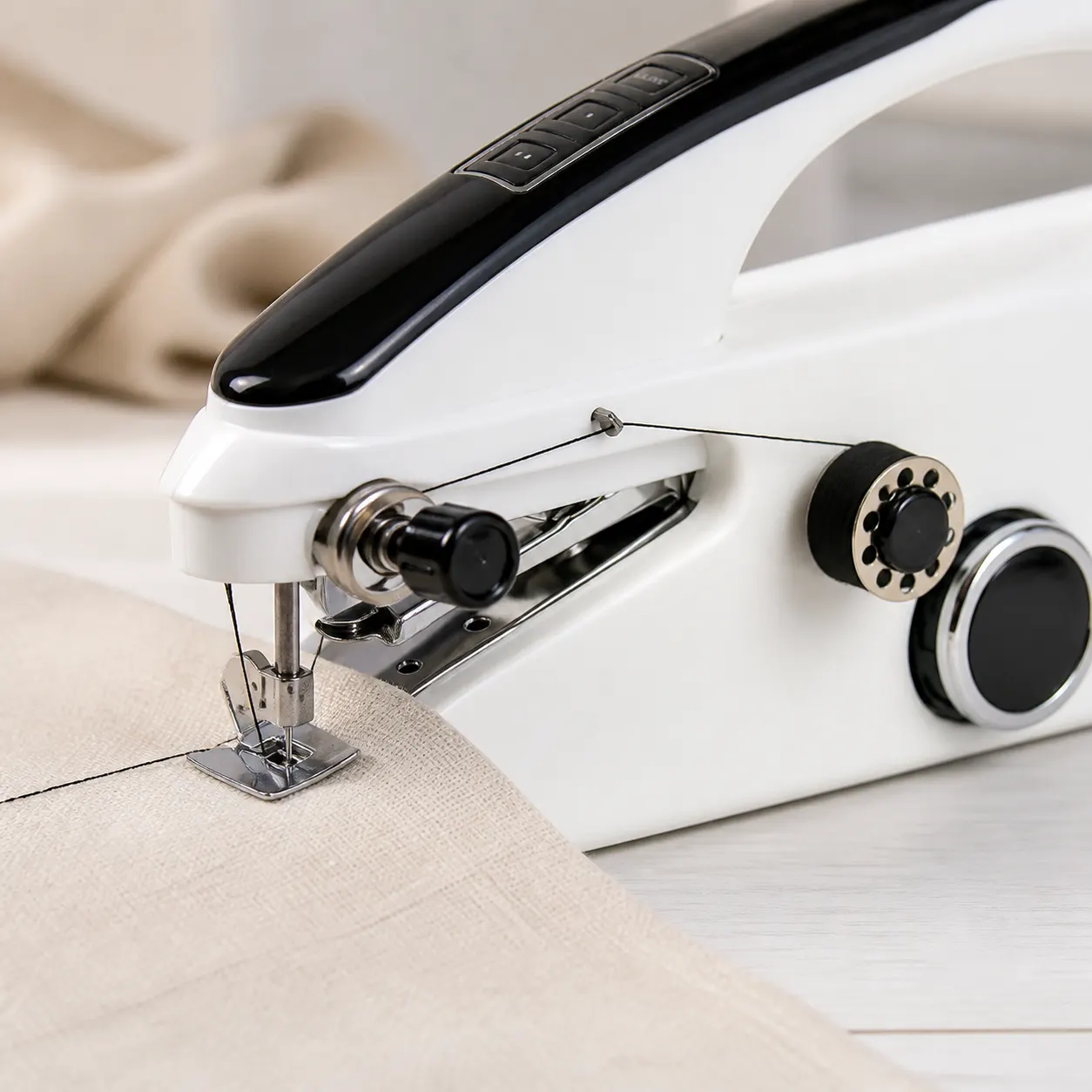
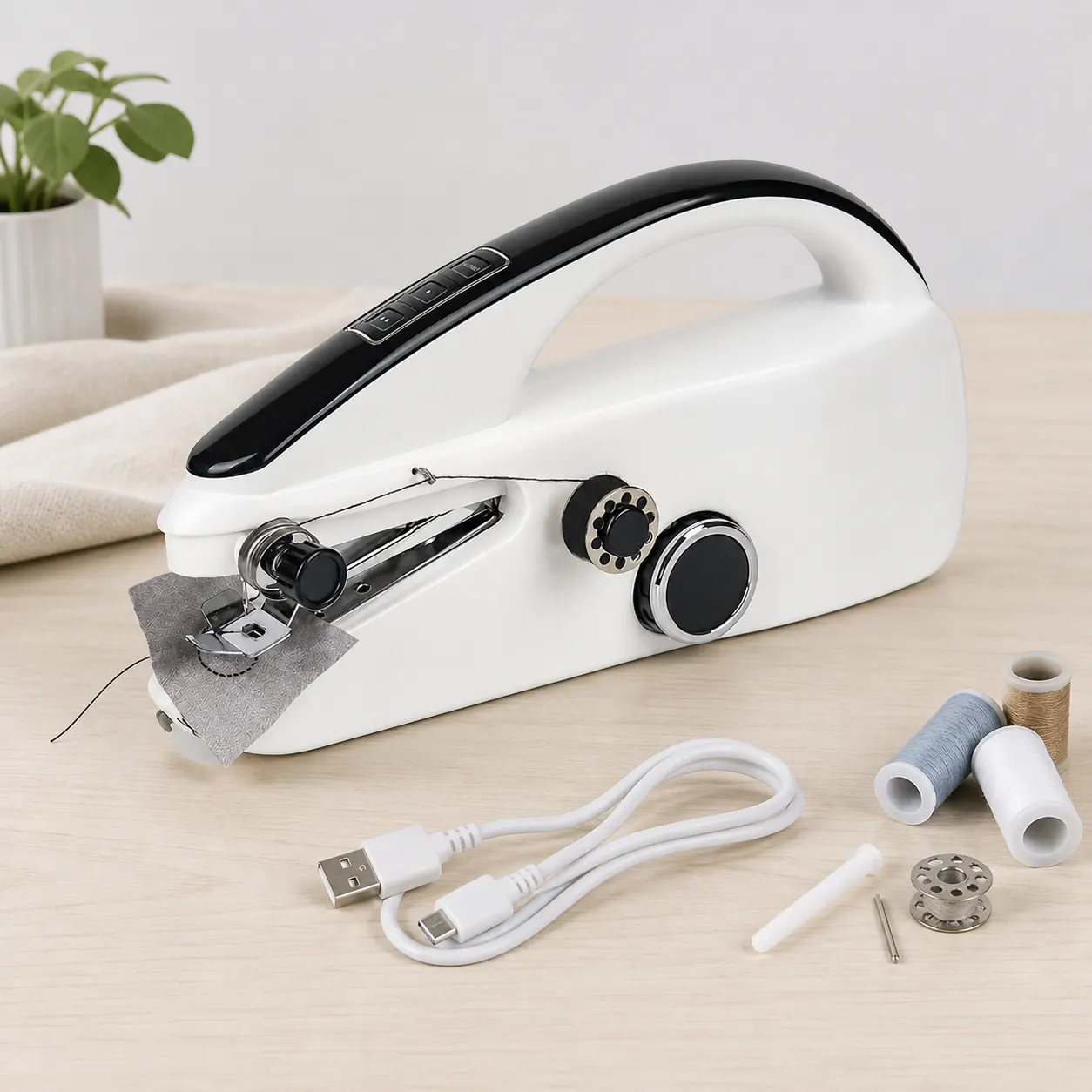
A portable hand sewing machine for hems can make sense when the job is small, the fabric is light, and you want a basic stitch without setting up a full-size sewing machine. The White SM8888 Handheld Mini Sewing Machine is documented as a white handheld mini sewing machine, model SM8888, with 5W rated power, 6V rated voltage, and USB or dry-battery power methods. On those facts, treat it as a compact repair helper for simple stitching, not as a promise that every trouser hem, curtain edge or layered garment will be easy.
The practical decision is whether your repair is modest enough to suit a handheld format. If you are sitting at a kitchen table in Leeds with one loose hem and limited storage, the appeal is obvious: a small tool can live in a drawer and come out for an immediate mending job. If you need precise finishing on visible formalwear, repeated alterations, or thick folded fabric, the safer expectation is that a full-size machine, hand sewing, or an alterations service may be more appropriate.
The UK Home Setting Where A Handheld Tool Makes Sense
The strongest setting for this kind of tool is a normal UK home where sewing is occasional and the task is slightly annoying rather than a full project. Think of a rented flat in Bristol, a student room in Manchester, or a family kitchen in Nottingham where there is no permanent sewing table. The job is to get a small fabric problem under control: a hem that has come loose, a simple seam that needs attention, or a lightweight textile that needs a basic line of stitching before it can be used again.
That matters because space changes buying behaviour. Someone who sews every week will judge a machine by stitch options, feed control, accessories and long-session comfort. Someone with one loose hem judges it by whether it is compact, understandable and easy to store. The documented facts support the compact and power-method questions: it is a handheld mini sewing machine, listed as model SM8888, with USB and dry-battery power methods. They do not prove heavy-duty performance, professional finishing, or suitability for every fabric.
The Documented Checks Before You Buy For Hems
Start with the facts that are actually documented. The selected product is the White SM8888 Handheld Mini Sewing Machine. Its listed model is SM8888. Its recorded power attributes are 5W rated power and 6V rated voltage. Its listed power methods are USB and dry battery. The price shown in the frozen offer is £31.64, with VAT included, Free UK Delivery, 1-3 business days processing, 2-4 business days delivery after dispatch, and a 30-day return window. Those are useful buying facts, but they are not the same as proof of fabric capability.
For a hem repair, translate those facts into ordinary checks. Handheld means you should expect to guide the fabric and tool carefully. Mini means storage should be easier than with a full-size machine, but it also signals that the tool should be matched to small tasks. USB and dry-battery power methods may suit a drawer, craft box or small flat, but you still need to plan where you will work, how you will support the fabric, and whether the hem is light enough for a basic handheld repair attempt.
The Hem Jobs That Need A More Cautious Decision
The main mismatch risk is assuming that every hem is the same. A lightweight fabric edge on a casual item is a very different job from a thick trouser hem with multiple folded layers. The frozen facts do not document suitable materials, unsuitable materials, kit contents, usage steps or stitch claims. That absence matters. It means the article should not pretend the machine is proven for denim, curtains, upholstery, school blazers, bridalwear, workwear or layered repairs where power and control are critical.
You should also be cautious if the hem will be highly visible and appearance matters. A handheld format may be appealing for speed, but a neat visible hem still depends on fabric handling, alignment, thread choice and practice. If the garment is expensive, formal, sentimental or difficult to replace, the lowest-risk next step may be hand basting, testing on scrap fabric of similar thickness, or using an alterations service. A compact tool is most persuasive when the cost of a slightly imperfect basic repair is low.
A Practical Kitchen-Bench Checklist For The First Repair
Use this checklist before you commit the actual hem. First, check the product identity: the documented item is the white SM8888 handheld mini sewing machine, so make sure the offer you are considering matches that selected SKU and model. Second, check the power plan: the recorded power methods are USB and dry battery, so decide where you will work and how you will power it before the garment is on the table. Third, check the fabric surface: lay the hem flat and look for thick folds, bulky seams or uneven areas that may make a handheld line harder to control.
Fourth, check the setup space. A kitchen table or packing bench gives you more control than trying to hold the garment in the air. Fifth, check the visibility of the repair. If the hem will be seen close up, practise a short line on spare fabric or an unseen allowance before touching the main edge. Sixth, check the aftercare expectation. The frozen facts do not provide specialist care claims, so do not treat the stitch as a documented heavy-duty solution. Seventh, check the fallback: if the fabric resists, stop before damaging the garment.
Handheld, Hand Sewing Or Full-Size Machine At A Small Workshop Bench
For a small workshop bench in a shared studio, the sensible comparison is not about which option sounds most modern. It is about friction and risk. Hand sewing is slow but gives close control on awkward spots, visible edges and delicate repairs. A full-size machine takes more space and setup, but it is the more serious choice for repeated sewing, larger projects and better-supported fabric movement. A handheld mini sewing machine sits between those options: compact, lower commitment, and potentially useful for a quick basic line where the job is light and contained.
That middle position is exactly why expectations need to stay plain. If your main problem is clutter, a handheld format is attractive because it can be stored more easily than a conventional machine. If your main problem is skill, it may still require practice to guide a straight line. If your main problem is fabric thickness, the documented facts here do not give enough evidence to assume success. The best buyer is someone who wants an occasional repair option and is prepared to test, adjust and stop if the job looks beyond a compact handheld tool.
The Buying Details To Weigh Without Turning It Into A Spec Sheet
The listed price of £31.64 positions the SM8888 as a low-commitment purchase compared with many larger sewing machines, but price should not be the only filter. A cheaper tool can be good value if it solves the exact small problem you have. It is poor value if you buy it for work it has not been documented to handle. The important conversion question is practical: will a white handheld mini sewing machine with USB and dry-battery power methods remove enough hassle from your loose-hem problem to justify keeping it in a drawer?
The UK purchase details are also relevant because they affect planning. The frozen commerce policy states VAT included, Free UK Delivery, 1-3 business days processing, 2-4 business days delivery after dispatch, and a 30-day return window. Those details can help if the repair is not needed tonight but you want a compact tool ready for the next small clothing or household fabric problem. They should not be used to rush a mismatch. If the hem is urgent, valuable or thick, choose the repair route that best protects the item.
The Grounded Next Step For A Hem Repair Decision
Before buying, name the exact hem in front of you: lightweight casual trouser hem, thin costume edge, small household textile, or something thicker and more visible. Then compare that named job with the documented facts. The SM8888 is documented as a white handheld mini sewing machine with USB and dry-battery power methods, 5W rated power and 6V rated voltage. The facts support compactness and basic product identification. They do not support claims about heavy fabrics, professional alteration results, or replacing a full-size machine for regular sewing.
If your job is small, light and low-risk, the next step is to prepare a flat work surface, practise alignment, and keep the repair modest. If your job involves thick folds, expensive clothing, or a visible finish you would be unhappy to redo, the better next step is to slow down and choose hand sewing, a full-size machine, or an alterations service. That is the simplest way to use a portable hand sewing machine for hems wisely: buy it for the kind of small inconvenience it can plausibly reduce, not for every sewing problem in the house.