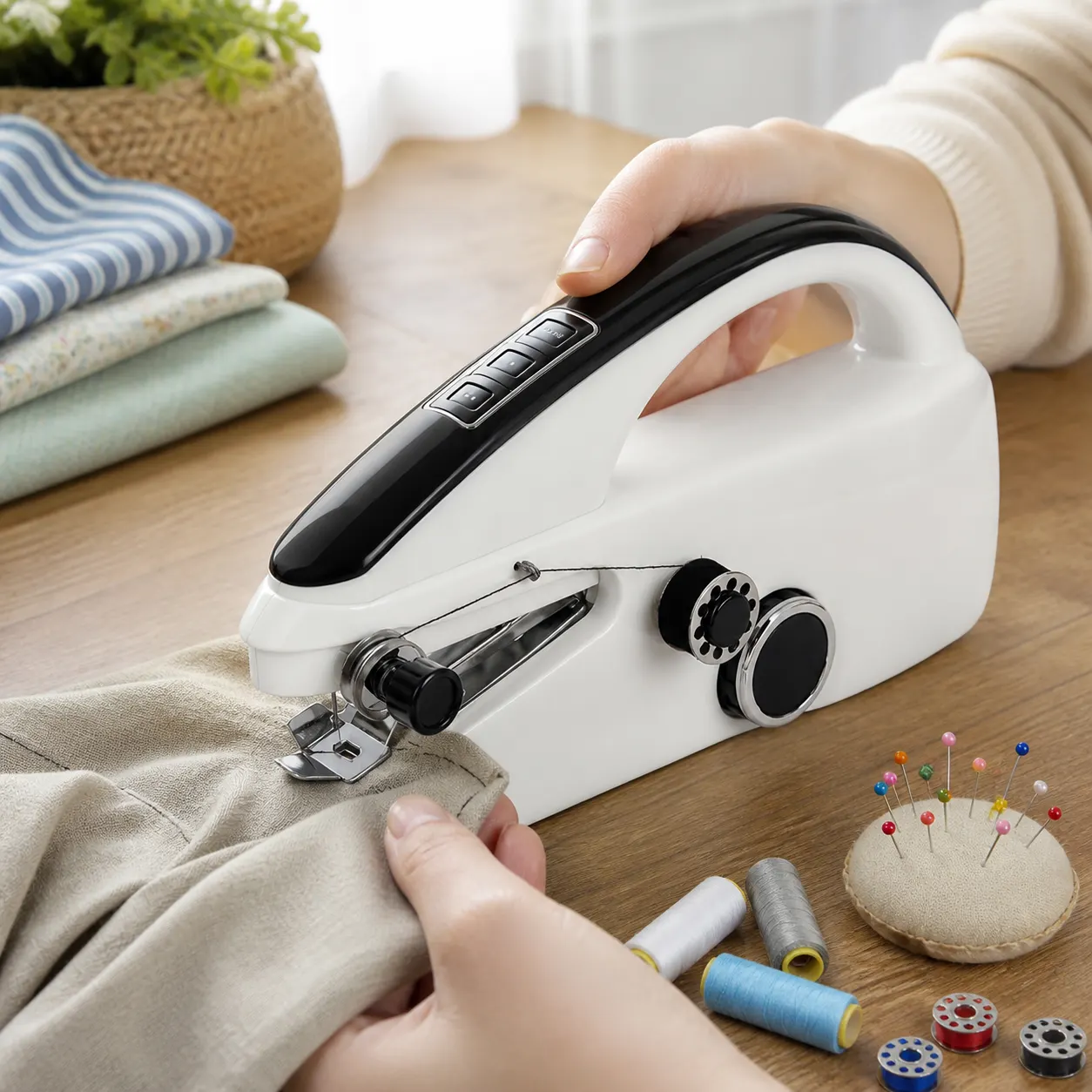
Short answer: A handheld sewing machine can be a useful option for a small clothes repair, but the repair should decide the purchase. The current listing identifies a white SM8888 handheld mini sewing machine with 5 W rated power, 6 V rated voltage, USB power and dry-battery power methods. It does not specify stitch length, needle size, fabric thickness, speed, runtime, accessory contents or certification. That makes it suitable for a careful shortlist, not a promise that it will handle every hem or seam. Check the fabric, repair shape and instructions before starting.
What the SM8888 listing confirms
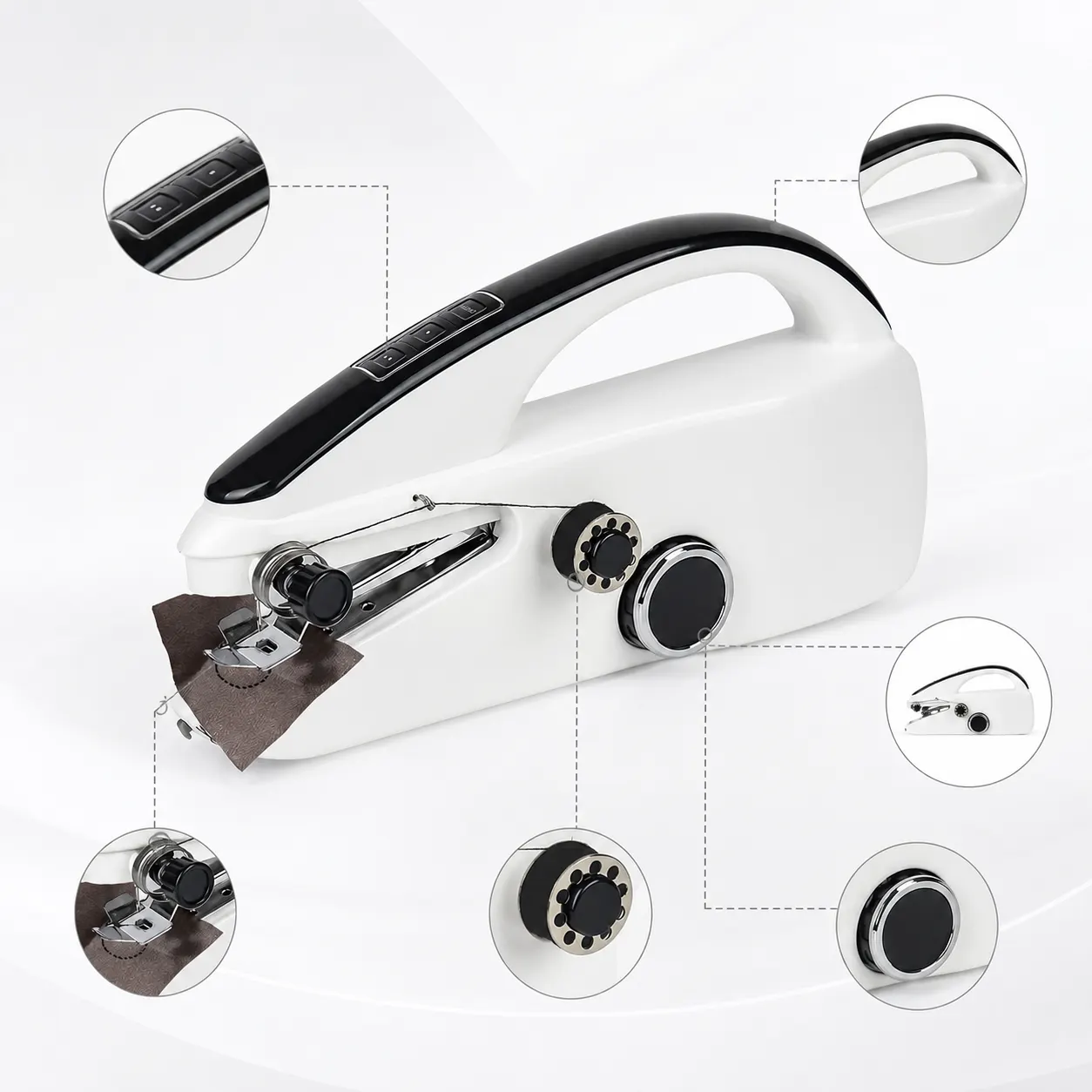
The selected product is a white SM8888 Handheld Mini Sewing Machine. The page states 5 W rated power and 6 V rated voltage, and lists USB and dry-battery power methods. Those facts describe the selected item and its power arrangement; they do not describe the complete sewing performance.
The manufacturer does not specify stitch length, needle size, thread type, fabric thickness, speed control, runtime, included tools, replacement parts, certification or service life on the current product page. Do not import those details from another mini machine.
| Question | Published fact | Boundary before repair |
|---|---|---|
| Model and colour | White SM8888 | Check the received variant |
| Rated power | 5 W | Not a fabric-capacity claim |
| Rated voltage | 6 V | Use only the stated power method and instructions |
| Power methods | USB and dry batteries listed | Battery type and runtime are not specified |
Match the repair to the tool
A loose hem, a short open seam and a light household textile are different from thick layered denim, structured tailoring, stretch fabric or a long straight production seam. The product page does not state a maximum fabric thickness or a guaranteed material range, so the manufacturer does not specify those limits.
Look at the repair before threading anything. Consider whether the fabric can be held flat, whether the seam can be reached without twisting the garment, and whether a hand stitch or full-size machine would give better control. A small body does not prove that the machine can reach every area or produce a finished edge.
- Identify the garment, seam length and fabric layers.
- Check the instructions for threading, needle handling and the listed power method.
- Test on a hidden piece or matching scrap before touching the garment.
- Stop if the fabric bunches, the thread pulls or the needle path becomes unclear.
- Use hand sewing, a full-size machine or an alterations service when the repair exceeds the documented scope.
Set up with a clear stopping point
Use the product only with the stated 6 V arrangement and the USB or dry-battery method described for the selected listing. The manufacturer does not specify the battery type, cable specification, charging behaviour or runtime, so do not assume that every USB supply or spare battery is suitable.
Keep fingers away from the needle path, secure loose fabric and work with the machine on a stable surface. If the instructions do not explain a control, threading step or jam-clearing method, pause rather than forcing the mechanism. A small repair is not worth an avoidable needle injury or damaged garment.
Limits and buying checks
This product is a reasonable candidate for a short, light repair when the user can control the fabric and the instructions cover the setup. It is not evidence of a stated stitch length, power level under load, maximum fabric weight, speed, runtime, needle compatibility or long-term durability.
The manufacturer does not specify certification, complete accessory contents, spare needles, thread compatibility or service life. Ask about any missing detail that could change the repair decision. Choose a conventional machine or professional alteration service when the garment is valuable, the seam is structural or the fabric needs a capability that is not documented.
Related guides and product details
Buy the SM8888 for a defined light repair only after the fabric and setup fit its documented limits; otherwise choose hand sewing or a fuller machine. Read Portable Hand Sewing Machine for Hems: Check the Repair First for related guidance. Read Quick Repair Sewing Machine UK: When a Handheld Model Fits for related guidance. Review the documented specification on the White SM8888 Handheld Mini Sewing Machine product page before ordering.
Sources and safety context
- Supports the white SM8888 identity, 5 W rated power, 6 V rated voltage and USB and dry-battery power methods. Current SM8888 product page.